Lemann Foundation
For a Brazil that believes in its people. For people who believe in Brazil.
We, at the Lemann Foundation, are a nonpartisan, family-based philanthropic organization that believes people who realize their full potential not only transform their own lives but also help build the Brazil we all dream of: fairer and more developed for everyone.
Together with organizations, co-investors, governments, leading universities, research centers, and other partners, we are part of an ecosystem of impact. We are committed to supporting public education policies that ensure learning for every child and adolescent, and to advancing initiatives that foster diverse leadership dedicated to addressing Brazil’s most pressing challenges. Our work aligns with the United Nation’s goals to ensure inclusive and equitable education and promote lifelong learning opportunities for all, reduce inequality, and forge global partnerships in the name of sustainable development.
Brazil in context
Population:
(source: IBGE)
GDP:
*top 10 worldwide
(source: World Bank)
Among the
in terms of inequality
students enrolled in the public school system
(source: INEP)
people employed in the public sector
(source: IPEA)
Why Brasil?
Brazil is one of the least equitable countries in the world, even though it is one of the wealthiest and fastest-growing. While, at $1.8 trillion GDP it ranks among the likes of China, Germany, and the United States, in terms of inequality it ranks alongside Central African Republic, Lesotho, and Zambia. In a dynamic democracy of over 207 million people that is teeming with natural resources, there is no reason this inequality should persist.
At the heart of Brazil’s inequality crisis is “learning poverty,” a term the World Bank uses to reflect the number of children in a country who reach the age of 10 without being able to read. Today, 48% of children in Brazil are “learning impoverished.” At its current rate of improvement, it will take Brazil a staggering 260 years to reach rich-country reading scores.
Low-quality public education sets the entire country back, but its effects are even more disastrous for historically marginalized groups, especially Afro-Brazilian and indigenous communities. Instead of empowering vulnerable groups to break the cycle of exclusion, limited learning opportunities perpetuate inequality. Afro-Brazilian students are 2.5 times more likely to be illiterate than their white peers, according to one recent study.
Out of a total of 200 million Brazilians, about half are of African ancestry. Taken together, they would make up the second biggest black country in the world after Nigeria. The number of human beings being systematically precluded from achieving their fullest potential is massive.
Why Now?
To address its dual education and inequality crises, Brazil needs social and political leaders with extensive technical and managerial skills. Unfortunately, only eight percent of Brazilians believe that the most skilled individuals are appointed to public sector positions. This issue is only exacerbated by Brazil ranking 105th on Transparency International’s Corruption Perceptions Index.
Recent international headlines have cast Brazil in a less-than-ideal light — polarization, corruption, and a lack of confidence in politicians, even NGOs. These realities discourage the best and brightest Brazilians from participating in the public sector and dedicating themselves to solving Brazil’s toughest problems.
The World Bank has sounded the alarm that the learning crisis undermines a country’s ability to foster sustainable growth and reduce poverty. The current generation of Brazilians is on the brink of getting trapped in the cycle of inequality that has swallowed up so many generations before it. But with the current countrywide implementation of our newly passed national education standards, Brazil has never been better positioned to address this state of affairs head-on.

Advancing Brazil’s education system
We support and contribute to the development of public policies that ensure age-appropriate learning, with a focus on eradicating illiteracy and building schools that engage adolescents, reduce inequalities, and promote the holistic development of every student throughout their educational journey.

We connect networks of people and foster partnerships dedicated to social impact, encouraging leaders who reflect the diversity of our country to continue strengthening their skills through training programs and projects that drive their journeys forward.
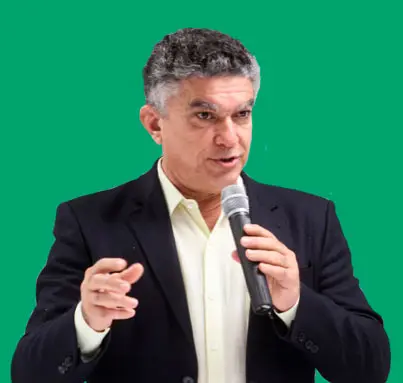
"I was the mayor of the city of Sobral in the northeastern state of Ceará, which is now known for its educational excellence. In five years, literacy rates rose from 52 percent to 92 percent. Today, with the support of the Lemann Foundation, the Associação Bem Comum is working to scale what worked in Sobral to all the children in Brazil’s public school system."
Veveu Arruda, Lemann Fellow, Head of the Associação Bem Comum, former Mayor of Sobral
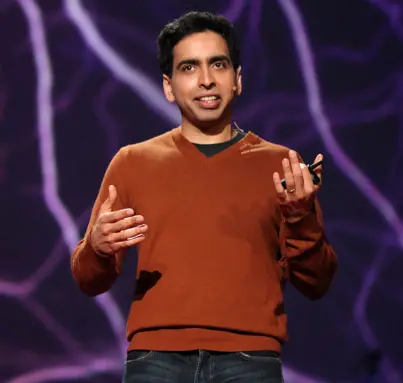
"The Khan Academy owes most of its success in Brazil to the Lemann Foundation, which has been our partner since 2011. We used to be a very small organization; we had ten or 15 employees, and we were concerned about making ends meet. They supported us and spearheaded the efforts to meet the National Learning Standards, and that is the reason Brazil is the country where we made the most progress. Whenever someone contacts us and says they would like to bring Khan Academy to their country, we tell them Brazil is a role model."
Salman Khan, CEO of Khan Academy
"In public schools in São Paulo, we started with a question: how do you solve the problem of garbage in the community using robotics? Students started to combat the problem of garbage in their neighborhoods by transforming waste into working robots. Now, I’m working with the Lemann Foundation to bring Robotica com Sucata (“Robotics from Scraps”) to students across Brazil."
Débora Garofalo, one of ten finalists for the Global Teacher Prize 2019

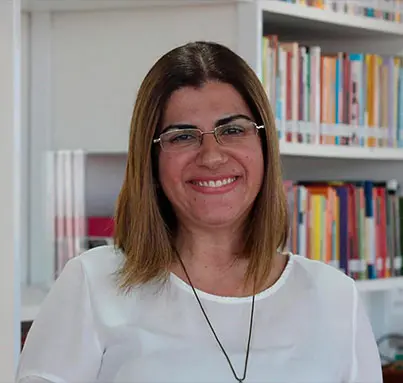
"The partnership established between the Baobá Fund, the W.K. Kellogg Foundation, and the Lemann Foundation is of paramount importance to the black population and the Brazilian society as a whole because it reiterates that social transformation can be sustained if there is better and greater investment in education, interculturality, and expanding networks."
Selma Moreira, Director of the Baobá Fund for Racial Equity
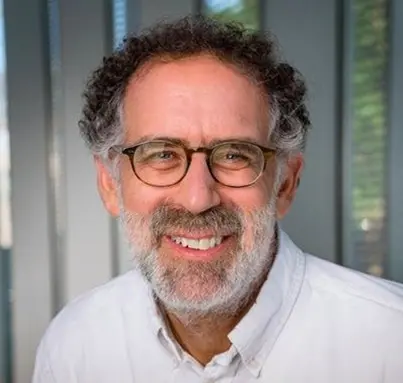
"In today’s fast-changing world, there is nothing more important than the ability to think and act creatively. The Brazilian Creative Learning Network, created in partnership with the Lemann Foundation, serves as a wonderful exemplar of how educators can join together to support creative learning experiences for all children, from all backgrounds. All of us, all over the world, can learn a lot from the Brazilian Creative Learning Network. "
Mitchel Resnick - Director of the Lifelong Kindergarten group at the Massachusetts Institute of Technology (MIT) Media Lab
Our ecosystem of impact is made up of partner organizations, co-investors, governments, leading universities, and research centers. Together, we drive transformation toward a fairer and more developed Brazil, alongside organizations that share our dream and common goals: strengthening and implementing public policies that ensure quality education for all, and fostering diverse leadership that is open to dialogue and committed to innovative, meaningful solutions for the country.
This is how, side by side, we help every person reach their full potential. To begin new stories.
We keep on changing Brazil. Really.
"I think we will see more organizations around the world forming partnerships with other organizations rather than embarking on projects alone. The Lemann Foundation has been doing this for years via partnerships with the Omidyar Network and Google.org. These joint efforts give us the best chance of getting the results we want and scaling them up."
Denis Mizne, CEO Lemann Foundation